
Millions Join Global Day of Action Calling for #CeasefireNOW
Millions Join Global Day of Action Calling for #CeasefireNOW

On Monday 18 December, organisations and individuals from more than 90 countries across the world, including Terre des Hommes will mark a Global Day of Action to push for a sustained ceasefire in Israel and the Occupied Palestinian Territory to protect all civilians affected by the conflict.
The event is organised by humanitarian and human rights NGOs from across the world. In total, more than 3.5 million signatures have been recorded across three major ceasefire petitions–Change.org, Amnesty International, and Avaaz. The Global Day of Action will activate and make visible the collective strength and power of international calls on political leaders to push for a ceasefire now.
Amidst an unprecedented humanitarian catastrophe in Gaza, a ceasefire is urgently needed to end further loss of life and ensure sufficient aid reaches those in dire need. Get involved in your local and national actions to support the ceasefire and sign the petition now.

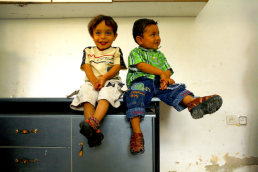
Breaking Barriers, Building Hope: Launch of Terre des Hommes Annual Report 2022
Breaking Barriers, Building Hope: Terre des Hommes Annual Report 2022
In a year defined by unprecedented challenges, Terre des Hommes International Federation presents our Annual Report for 2022 showcasing our resilience, progress, and unwavering commitment to build a world where every child has a safe and enjoyable childhood.
This year, through the implementation of 890 projects in 68 countries across the globe, we have supported 8,204,543 persons –children and young people as well as their family and community members by working towards a cleaner, healthier and more sustainable environment for children, ending all forms of violence against them, improving the protection of children on the move, and enhancing child and youth participation.
Amid a multitude of global crises, we championed child and youth participation, amplifying their voices at the 5th Global Conference on child labor elimination. This pivotal occasion involved the active participation of 60 young minds, shaping policies on the international stage.
With the launch of our Operational Plan this year, we reflect on the past year, share hopeful stories of the children our programmes have supported and extend our heartfelt thanks to our partners, supporters, and dedicated staff. Your support fuels our vision for a world where every child thrives.
Thank you for enabling us to build a brighter, safer future for children worldwide.
UDHR 75 event: Revitalising the universal commitment to children’s rights, with and for children!
UDHR 75: Revitalising the universal commitment to children’s rights, with and for children!
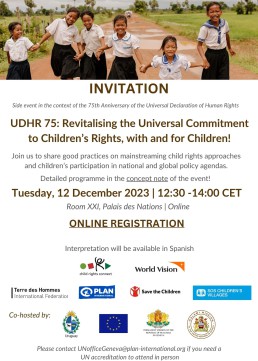
On the margins of the UDHR 75 high-level event, this side event will provide a space for an intergenerational dialogue between States, UN, civil society, including children themselves to share good practices on mainstreaming child rights approaches and children’s participation in national and global policy agendas.
Please find more details in the concept note here and the programme below:
Programme:
Moderator: Doris, Child Human Rights Defender, Zambia
Opening remarks:
- H.E. Lotte Knudsen, Ambassador and Head of the Delegation of the European Union to the United Nations in Geneva
- H.E. Yuri Sterk, Ambassador and Permanent Representative of Bulgaria to the United Nations in Geneva
- Minister Alejandra Costa, Deputy Director General for Political Affairs of the Ministry of Foreign Affairs of Uruguay
Q&A Panel discussion :
- Anghelina, Child Human Rights Defender, Moldova
- Fran, Child Human Rights Defender, Croatia
- Mr. Pacharo Kayira, Deputy Permanent Representative of Malawi to the United Nations in Geneva
- Dr. Philip Jaffé, Member of the UN Committee on the Rights of the Child
- Hon. Anne Musiwa, Rapporteur of the African Committee of Experts on the Rights and Welfare of the Child
Closing remarks:
- Ms. Valerie Ceccherini, Secretary General of Terre des Hommes International Federation
Q&A with the audience
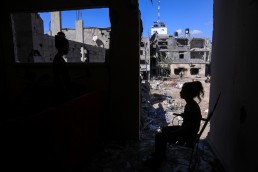
Discriminatory Funding Policies by European Governments Threaten Human Rights
Discriminatory Funding Policies by European Governments Threaten Human Rights
Terre des Hommes is greatly concerned by some European governments and the European Commission’s revision or suspension of crucial funding for Palestinian and Israeli civil society organisations and call on them to immediately reverse these decisions.
Terre des Hommes, together with over 100 civil society organisations have signed a joint letter expressing deep concern over the decisions of several European governments to suspend or review funding for numerous Palestinian and Israeli civil society organisations. These decisions, taken by countries such as Austria, Denmark, Finland, Germany, Sweden and Switzerland, as well as the European Commission -based on allegations which are not founded on credible evidence-, will reduce critical support for Human Rights defenders and therefore, further erode human rights’ protections across the region.
Find the letter and list of signatories here.
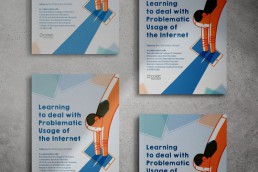
BooTStRaP: innovative research to reduce the impact of digitalisation on children’s mental health in Europe
BooTStRaP: innovative research to reduce the impact of digitalisation on children’s mental health in Europe
We are excited to announce our involvement as members of the Impact Advisory Board, in the new BooTStRaP programme (Boosting Societal Adaptation and Mental Health in a Rapidly Digitalising, Post-Pandemic Europe), a five-years multi country research programme in Europe (2023-2028) co-funded by the European Union, the Swiss government and the UK’s national innovation agency. BooTStRaP brings together a multidisciplinary consortium of Universities, Hospitals, Public Mental Health Institutes, scientists and experts aimed at initiating health and social policy and practice change designed to reduce the harmful effects of digitalisation on mental health for children and young people.
Adolescents, in particular aged 12 to 16 years are at particularly high risk of digital technology overuse and are disproportionally affected by the Problematic Usage of the Internet (PUI), therefore they are vulnerable to its potential harmful effects on their mental health. The PUI can be conceptualised as a marker of ‘disrupted self-management’ and encompasses a wide range of repetitive disabling behaviors characterised by compulsivity and addiction. These include, but are not limited to, internet gaming, cyberbullying,compulsive online sexual behaviors/ cyberpornography, among others.
The BooTStRaP programme will provide unprecedented scientific knowledge on the psychological mechanisms underlying (risk for) PUI and potential interventions. Improved self-management and tools to optimise healthy internet usage will promote mental health, prevent mental ill in adolescents, and contribute to reducing stigma. In the long run, BooTStRap will thus contribute to empowering young people to self-manage their internet usage patterns and improve their mental wellbeing across Europe.
For more info, please visit the BooTStRap programme website

We call on EU leaders to prevent and combat child sexual abuse
We call on EU leaders to prevent and combat child sexual abuse
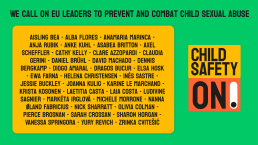
Dear decision makers in Austria, Belgium, Bulgaria, Croatia, Republic of Cyprus, Czech Republic, Denmark, Estonia, Finland, France, Germany, Greece, Hungary, Ireland, Italy, Latvia, Lithuania, Luxembourg, Malta, Netherlands, Poland, Portugal,
Romania, Slovakia, Slovenia, Spain and Sweden and all Members of the European Parliament,
As public figures, lawyers, human rights experts, and advocates for the well-being of our children, we join over 48 child rights organisations to urge you to support a new EU proposal to safeguard our children from perpetrators of child sexual
abuse and grooming online.
We put safety caps on medicine bottles, helmets on heads, and stabilisers on bikes. We cover plug sockets, secure stairs, and fasten seatbelts. We have never been better at keeping our children safe – so why can’t we keep them safe online?
Children’s right to be protected shouldn’t be limited to the oine world. Child sexual abuse is a problem that reaches into our homes through our tablets, phones, and laptops. It is a global issue, but hardly anywhere in the world has
introduced laws to stop it.
In the coming months, the EU has an opportunity to change that. A new EU proposal would make it compulsory for tech platforms to design safe services for our children; to detect, report, and remove child sexual abuse material from their
platforms and protect our children from grooming online. As political leaders in the EU, your actions over the coming weeks will determine the global response to online child sexual abuse.
These measures can be put in place in a way that both protects children online, and respects privacy laws. What’s more, research shows that people in Europe overwhelmingly support these proposals.
Our plea is simple: protect our children. We have the chance to transform the internet from a platform of potential harm into a safe haven for our kids. We can protect our children and our privacy. Let’s seize this opportunity together.
Yours sincerely,
Aisling Bea – Actor, writer & comedian
Alba Flores – Actor
Anamaria Marinca – Actor
Anja Rubik – Model & activist
Anke Kuhl – Children’s book illustrator
Asabea Britton – Midwife and influencer
Axel Scheer – Illustrator
Cathy Kelly – Author
Clare Azzopardi – Writer
Claudia Gerini – Artist
Daniel Brühl – Actor
David Machado – Author
Dennis Bergkamp – Former professional football player
Diogo Amaral – Actor
Dragos Bucur – Actor
Elsa Hosk – Model
Ewa Farna – Artist
Helena Christensen – Goodwill Ambassador, photographer, model
Inés Sastre – Actress & model
Jessie Buckley – Actor
Joanna Kulig – Actress
Karine Le Marchand – TV host & producer
Krista Kosonen – Actress
Laetitia Casta – Actress, film-maker & producer
Laia Costa – Actress
Ludivine Sagnier Actress
Markéta Irglová – Singer-songwriter & musician
Michele Morrone – Actor
Nanna Øland Fabricius/ Oh Land – Musician
Nick Sharratt – Illustrator
Olivia Colman – Actor
Pierce Brosnan – Actor
Sarah Crossan – Author
Sharon Horgan – Actor & writer
Vanessa Springora – Author and publisher
Yury Revich – Violinist and composer
Zrinka Cvitešić – Actress
Fernanda Bonacho, Professor – Escola Superior de Comunicação Social / IPLisboa
João Torres, Professor Adjunto – Escola Superior de Educação do Instituto Politécnico de Setúbal
Dr. Ákos Kozma, Commissioner for Fundamental Rights of Hungary – Office of the Commissioner for Fundamental Rights of Hungary
Charel Schmit, Ombudsman – Kanner a Jugendlecher
Eleni Drakopoulou, Developmental Psychologist – Panellic Association For Adapted Activities Alma
Lidia Marôpo, Associate Professor, Polytechnic Institute of Setubal
Danielle Kennan, Assistant Professor – UNESCO Child and Family Research Centre, University of Galway, Ireland
Susana Batista, Assistant Professor Universidade Nova de Lisboa
Dr. Maximilian Wanderwitz, Professor University of Applied Sciences Trier
Ann Rava-Lynn – IB Educator
Marion Macleod, Freelance Researcher in Child Welfare and Protection Researcher
Murielle Thibierge-Batude, President #IWAS Association
Peyré Virginie, Speaker Les Ami(e)s de Romy
Cristiane Miranda, Cofounder Agarrados à Net
Dr Ariella Rosita King, Founder & President Ariel Foundation International
Adriana de la Osa Guijarro, Directora General Asociación Estatal de Acogimiento Familiar (ASEAF)
Helena Escalada Pardo, Presidenta Asociación Estatal de Acogimiento Familiar (ASEAF)
Sónia Rodrigues, Presidente Associação AjudAjudar
Iro Michael, Head of Help Centre – Association for the Prevention and Handling of Violence in the Family (APHVF/ SPAVO)
Jessica Airey, Europe Campaign Manager – Brave Movement
Lianna McDonald, Executive Director Canadian Centre for Child Protection
Ulla Siimes, Executive Director Central Union for Child Welfare, Finland
Elena Colpaert Child Focus
Tine Knockaert, Case Manager Child Focus Belgium
Corinne Dettmeijer, Chair Supervisory Board Child Helpline International
Patrick Krens, Executive Director – Child Helpline International
Tatiana Ivanic, Executive director – Child Safety Line Slovakia (Linka detskej istoty)
Elise Sijtho; Journalist publisher – ChildPress.org
Laura Olalde – Project Assistant – ChildPress.org
John Carr Children’s Charities’ Coalition on Internet Safety
Elizabeth Gosme, Director COFACE Families Europe
Sara Sechi, Executive Secretary Don Bosco International
Av. Altin Hazizaj, LLM, MA, General Director, Attorney at Law ECPAT Albania
Astrid Winkler, Executive Director ECPAT Austria
Lea Peters, ECPAT Deutschland e.V. (ECPAT Germany)
Guillaume Landry, Executive Director ECPAT International
Celine Verheijen Defence for Children, ECPAT Netherlands
Ann-Kristin Vervik, Executive Director ECPAT Norway
Carme Tello Casany, President – ECPAT Spain/Federación de Asociaciones para la Prevención del Maltrato Infantil fapmi
Florence Elie, Fondatrice & Présidente Elien Rebirth
Mieke Schuurman, Director of Child Rights & Capacity Building – Eurochild
Trendafil Meretev, Projects and Advocacy Manager – For Our Children Foundation – Bulgaria
Silvia Moroder, President Fundación ANAR
Marija Manojlovic, Safe Online Director Global Partnership to End Violence
Agnieszka Kozielska, Deputy CEO Happy Kids Foundation
Anna Hauser, Child Protection Coordinator Happy Kids Foundation
Agnieszka Smoczynska, CEO Happy Kids Foundation
John Tanagho, Executive Director – IJM Center to End Online Sexual Exploitation of Children
Julia von Weiler, Psychologist, CEO Innocence in Danger e.V.
Fernando Pascanu, Social worker Institutionalised Youth Council Cluj
Paula Paçó, Head of national and International Cooperation – Instituto de Apoio à Criança
Martina Raytchinova, International Programme Directo – Concordia
Susie Hargreaves OBE, CEO Internet Watch Foundation
John Church, CEO ISPCC
Guido Fluri, President Justice Initiative and Guido Fluri Foundation
Valérie Andanson, hub director Justice Initiative France
Dr. Sarah Stüber, Managing Director Kindermitte e.V.
Deborah Denis, CEO Lucy Faithfull Foundation
Victoria Green, CEO Marie Collins Foundation
Aage Leven, Secretary General Missing Children Europe
Angela Demeter, Membership Ocer Missing Children Europe
Natalja Kurcinskaja, Director Missing Persons’ families support centre
Tito de Morais, Founder MiudosSegurosNa.Net
Jovanka Lazarevic, Editor-in-chief NajboljaMamaNaSvetu.com
Anna Lára Steindal, Project Manager for Children and Youth – National Association of Intellectual Disabilities, Iceland
Eszter Harsanyi, CEO NestingPlay
Pelopidas – Alexios Nikolopoulos Lawyer (LLM), Advocacy Officer – Network for Children’s Rights
Peter Wanless, CEO NSPCC
Ninetta Kazantzis, President – Pancyprian Coordinating Committee for the Protection and Welfare of Children (PCCPWC), Cyprus
Carles López Picó, President Plataforma de Infancia
Julien Van Geertsom, former president PPS Social Integration, Fighting poverty and social economy (Belgian administration)
Mary Theodoropoulou, Founder and Director Roots Research Center
Mr. Costas Yannopoulos, President, Board of Directors – Smile of the Child
Sanja Škorić, Secretary and Vice-President – Society “Our children” Opatija / Union of Societies “Our children” Croatia
Lidia Giglio, Representative to the EU SOS Children’s Villages
Nina Vaaranen-Valkonen, Executive Director Suojellaan Lapsia ry Protect Children
Alketa Lasku, Regional Child Protection and Safeguarding Adviser for Europe – Terre des hommes European Regional Office Hungary
Valerie Ceccherini, Secretary General Terre des Hommes International Federation
Julie Verhaar, CEO Terre des Hommes Netherlands
Emily Slifer, Director of Policy Thorn
Stephanie Futter-Orel, Executive Manager WAVE Network (Women Against Violence Europe)
Iain Drennan, Executive
Director We Protect Global Alliance
Rebeca Paiva, Youth Delegate Brave Movement
Selma Kaymakci, Youth Delegate Brave Movement
Natálie Terčová, Research Specialist Masaryk University
Maja Staśko, activist and journalist Poland
Scharliina Eräpueo, Artist/Actress & Miss Finland Finalist, Youth Delegate – Protect Children
Myriam Hunfeld, Youth Delegate Brave Movement
Sanjivani Mauleón Etxeberria, Student, Youth Delegate – YEAs initiative

“The EP has failed children" - Survivors of childhood sexual violence and child rights activists issue damning assessment of the parliament's compromised version of child sexual abuse regulation
“THE EUROPEAN PARLIAMENT HAS FAILED CHILDREN” - SURVIVORS OF CHILDHOOD SEXUAL VIOLENCE AND CHILD RIGHTS ACTIVISTS ISSUE DAMNING ASSESSMENT OF THE PARLIAMENT’S COMPROMISED VERSION OF CHILD SEXUAL ABUSE REGULATION
November 9, 2023: A coalition of over 80 organisations and survivors committed to advancing children’s rights and the elimination of sexual abuse, have written to EU leaders to express deep concern at the European Parliament’s compromise on the Regulation to prevent and combat child sexual abuse. The organisations, representing a collective frontline against child sexual abuse, stated: “We cannot accept a step back from the current situation in the protection of children online.”
The European Parliament’s compromise was reached on October 26 after months of negotiations. This position is a significant shift from the Commission’s original proposal as it would greatly limit online service providers in their detection of child sexual abuse material online by imposing targeted detections, putting an end to current voluntary detections by platforms and excluding grooming from the scope of detections.
The coalition denounces the European Parliament’s approach, which would restrict detection of child sexual abuse to the extent that it would make it ineffective in tackling these crimes on a large scale. They argue that the Parliament has not only failed to move forward in strengthening protections for children online, but has actually proposed a step backward from the current measures already in place today because:
- Voluntary detection is critical: without voluntary detection, platforms are not able to properly safeguard their services and to protect children. Significant protection gaps will arise as soon as voluntary detections by platforms are no longer allowed, as the 58% drop in reports in 2021 showed when the EU legal framework was not yet in place. And other gaps will emerge during the long process leading to a detection order.
- Targeted detection of suspects is not effective to protect children: If we only allow detection of images and videos when a suspect is identified, we will limit the detection to an extremely small number of images and children, enabling potential abusers to easily continue to perpetrate abuse under the radar of law enforcement.
- Targeted detection of suspects is also not workable in practice due to the scale of the phenomenon: platforms reported 88.3 million images and videos of child sexual abuse online last year only and this is only the tip of the iceberg. Across the globe, thousands of predators are constantly opening new online accounts to target children and share millions of images and videos depicting child sexual abuse. How will we detect and remove content at this scale if we cannot use technology to do so?
- Grooming needs to be tackled now: Reports of grooming increased by 82% from 2021 to 2022. Preventing online and offline manifestations of child sexual abuse is an essential part of the solution. Deciding against detecting grooming means that we give up on the possibility of preventing future harm from happening in the first place.
Mié Kohiyama, survivor, member of the Brave Movement and founder of Be Brave France said: “The number one demand from survivors is to have their material removed from the internet and this can simply not be done without detection tools. I do not know if I will ever truly heal the trauma of being raped as a 5-year-old and I can’t imagine the horror of my abuse being online, available for predators and criminals to view and monetize. But this is the fate of thousands of children and survivors. Now is the time to ensure a workable, solid and effective EU regulation fit for its purpose. We call on the co-legislators of the EU to fulfill their commitment to protect children against sexual abuse now.”
Survivors and child rights advocates are asking for Member States to take a stronger position to protect children from sexual violence online and ensure a wide scope for detection of child sexual abuse materials and grooming on the internet.
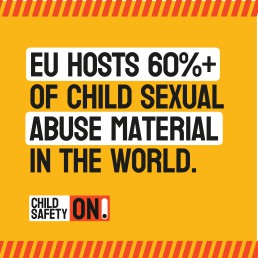
ECLAG Steering Group Statement in response to LIBE shadow rapporteurs agreement on the CSA Regulation
ECLAG Steering Group Statement in response to LIBE shadow rapporteurs agreement on the CSA Regulation
We as ECLAG Steering Group* take note of this week’s announcement about the political agreement between shadow rapporteurs on the Regulation laying down rules to prevent and combat child sexual abuse. While we welcome Parliament’s commitment to find a broad compromise including prevention measures, detection of known and unknown CSAM and the creation of Victim’s Rights and Survivors Forum within the EU Centre, we are gravely concerned about the exclusion of grooming from the Regulation’s scope of detection orders as well as the absence of a legal basis for providers to voluntarily detect and keep their platforms free of CSAM and grooming. The announced targeting of detection orders to only users suspected of sharing CSAM also risks greatly undermining the effectiveness of the Regulation, leading to a drastic reduction of the amount of CSAM detected, reported and removed, and effectively limiting the children protected by this Regulation.
As a consequence, this compromise does not fully address the protection of children and survivors of child sexual abuse and misses the historic opportunity for the EU to effectively tackle the horrific crimes, leaving children more vulnerable to child sexual abuse than today.
Trusting the commitment of all European Institutions to protect children’s rights in the face of increasing threats online, ECLAG calls on co-legislators to extend the scope of detection orders and create a framework for voluntary detection in the Regulation as part of ongoing negotiations. We call on all EU decision-makers to not fail children, victims and survivors and adopt ambitious measures to effectively protect children from sexual abuse and grooming.
* The European Child Sexual Abuse Legislation Advocacy Group (ECLAG) is a coalition of child rights NGOs joining forces to fight to protect children from sexual violence and abuse. ECLAG brings together over 65 European and global NGOs. It supports the #ChildSafetyON campaign to call for laws and policies to ensure children are safe online. ECLAG Steering Group includes Brave
Movement, ECPAT International, Eurochild, Missing Children Europe, Internet Watch Foundation, Terre des Hommes and Thorn.
#CeasefireNow: Call for an Immediate Ceasefire in the Gaza Strip and Israel to Prevent Further Loss of Innocent Lives
#CeasefireNow: Open Call for an Immediate Ceasefire in the Gaza Strip and Israel to Prevent a Humanitarian Catastrophe and Further Loss of Innocent Lives
We have witnessed unfathomable death and destruction in the Gaza Strip and Israel. Thousands of people have been killed, injured, displaced, and nearly two hundred remain held hostage, including children and elderly.
In Gaza, the UN has said that water, food, fuel, medical supplies, and even body bags, are running out due to the siege. The UN warned that people – particularly young children – will soon start dying of severe dehydration. Neighbourhoods have been destroyed and turned into complete rubble. Palestinians in search of safety have nowhere to go. Many of those who relocated from northern Gaza to the south after the relocation order by the Israeli army were reportedly bombed as they attempted to flee or once they arrived in southern Gaza.
The events of the last week have led us to the precipice of a humanitarian catastrophe and the world can no longer wait to act. It is our collective responsibility.
On Sunday, October 15th, the United Nations Humanitarian Coordinator to the Occupied Palestinian Territory appealed to all parties to the conflict, and to Member States with influence, to urgently agree to a humanitarian ceasefire.
Today, we put our voices together and call on all Heads of State, the UN Security Council, and actors on the ground, to prioritize the preservation of human life above all else. During this ceasefire, we call on all parties to unconditionally:
- Facilitate the delivery of lifesaving assistance, including food, medical supplies, fuel, and the resumption of electricity and internet to Gaza, in addition to safe passage of humanitarian and medical staff
- Free all civilian hostages, especially children and elderly
- Allow humanitarian convoys to reach UN facilities, schools, hospitals, and health facilities in northern Gaza and commit to protecting them along with the civilians and staff inside them at all times
- Rescind orders by the Government of Israel for civilians to depart northern Gaza
- Allow patients in critical condition to be medically evacuated for urgent care
The UN Security Council, the UN Secretary General and all world leaders with influence must take immediate action to ensure a ceasefire comes into effect. It remains our only option to avert further loss of civilian life and humanitarian catastrophe. Anything less will forever be a stain on our collective conscience.
Civilians are not bargaining chips. Families need a chance to bury and mourn their dead. The cycle of violence against innocent civilians needs to stop.
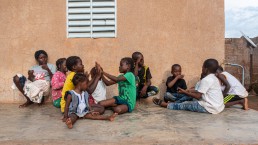
European Parliament Committees Take a Stand Against Forced Labor: Stronger Protections and Penalties in the Pipeline
EP Committees Take a Stand Against Forced Labor: Stronger Protections and Penalties in the Pipeline
On Monday 16 October, the Internal Market and International Trade (INTA) committees of the European Parliament (EP) adopted their joint position on keeping products made using forced labour out of the EU market and stopping forced labour along companies’ supply chains across the world.
The use of forced labour is widespread across the globe. It is estimated that about 27.6 million people are in forced labour. Of these more than 3.3 million are children. Most forced labour occurs in the private sector.
Terre des Hommes International Federation welcomes the EP Committees for their adoption of the proposal, which marks a significant improvement over the European Commission’s initial proposal from last year. This earlier proposal failed to adequately address the critical issue of protecting workers from forced labor, particularly children. The revised proposal now places remedies for these issues at its core. The EP Committee’s adopted proposal would put in place a framework to investigate the use of forced labour, protect and provide victims access to appropriate and effective remedies and sanction perpetrators of forced or compulsory labour. If a company has been convicted of using forced labour, all import and export of the related goods would be halted at the EU’s borders and companies would also have to withdraw goods that have already reached the EU market. These would then be donated, recycled or destroyed.
Goods that have been removed from the EU market could be allowed back only after the company has convincingly demonstrated that it has stopped using forced labour in its operations and supply chain and that it has remedied all victims irrespective of their presence, residence and migration status in the national territory. The inclusion of remedies for all workers trapped in forced labour would thus become a legal obligation for the economic operators.
The EP committees have made a crucial amendment to the Commission’s proposal by expanding the definition of forced labor. This broader definition now encompasses some of the worst forms of child labor when they align with the ILO guidelines’ operational definitions and indicators for forced child labor.
The role of international cooperation as well as civil society organisations to address the root causes of forced labour would also be strengthened. However, while the EP Committees’ proposal has included important provisions for the protection of victims of forced labour, including of children, the investigative framework proposed is weak and unrealistic due to the amount of evidence required to start an investigation and the short deadlines to determine if cases of forced labour have occurred. This is crucial, as investigations can ultimately result in banning products produced through forced labor.
The proposal by INTA and the Internal Market committees will now move to the European Parliament’s plenary session for confirmation as the EP’s negotiation mandate with the Council. Once the Council adopts its position, inter-institutional trialogue negotiations will commence. We will continue to advocate and push for the further improvement of the legislation and its adoption before the next EP elections in June 2024.
Photo credit: Tdh/Noomwindé Sawadogo /Brand Image