
Statement to the Global Digital Compact on Key Priority Issues for Child Rights and the Digital Environment
Statement to the Global Digital Compact on Key Priority Issues for Child Rights and the Digital Environment
Joint position paper on behalf of: Child Rights Connect, Alana Institute, ChildFund Alliance, Child Rights International Network (CRIN), ECPAT, Foundation for the Student Rights (Poland), Make Mothers Matter, Plan International, Plataforma de Infancia, Save the Children, SOS Children’s Villages, Terre des Hommes International Federation, World Vision International and 5Rights Foundation.
Overarching Principles for the Global Digital Compact
The digital environment plays an increasingly significant role across most aspects of children’s lives, offering opportunities but equally presenting significant risks. One in three internet users is a child, and, especially since the COVID-19 pandemic, children’s development, relationships, education and play are increasingly mediated by digital technologies.
Children have long-established rights and protections under the United Nations Convention on the Rights of the Child (UNCRC), and a life mediated by technology must be held to these standards. Thus, in today’s world, where the line between a child’s online and offline lives is increasingly blurred, it is essential to acknowledge that children’s rights apply fully in the digital environment.
The obligations of States to respect, protect and fulfill child rights in the digital environment, as well as the responsibilities of the business sector to respect, prevent, mitigate, and, where appropriate, remedy abuses, are clearly explained in the Committee on the Rights of the Child General Comment
No. 25.
The UN Global Digital Compact is the opportunity to drive awareness and reinforce the global political commitment to the implementation of children’s existing rights as set out in the UNCRC and its General comments in the digital world and focus on political will. We recommend that the UN Global
Digital Compact reaffirm the core tenets of children’s rights in the digital environment and include the following key overarching principles to guide all the identified thematic priorities:
• Recognize that international human rights law, including the UNCRC, applies in full in the digital environment. All children’s rights must be respected, protected, and fulfilled in practice online, including but not limited to products and services specifically designed for them or directed toward them.
• The digital environment must be safe and age-appropriate for children, taking into account that children are not a homogenous group, respect their full range of rights and be designed and operated with their best interests in mind, integrating privacy, safety and security by design and by default.
• Ensuring the respect and fulfilment of the right of the child to be heard with regards to the digital environment, taking children’s views and the diversity of their situations into account by States in the development of laws, policies and by businesses in their activities, including in relation to the design, development, operation, and marketing of their products and services.
The promotion, protection and implementation of children’s rights in the digital environment must be a core principle of the UN Global Digital Compact and across all its thematic areas.
Background
The digital environment plays an increasingly significant role across most aspects of children’s lives. One in three internet users is a child, and, especially since the COVID-19 pandemic, children’s development, relationships, education and play are increasingly mediated by digital technologies.
The digital environment is predominantly privately designed, owned, operated, and largely unregulated. Regulating and enforcing businesses’ responsibility to respect children’s rights, prevent and remedy abuse of their rights, including through providing children with a high level of privacy,
safety and security by design and default, and upholding consistent global standards, is urgent for ensuring children’s rights in the digital environment.
Meaningful and equal access to safe digital technologies can support children to realize the full range of their civil, political, economic, social, and cultural rights. Children particularly value access to information and exchange, and to expression and having their voice heard. Yet millions of children have no access to the digital environment at all. There is a growing cost for children from the digital divide, including the gender-related digital divide.
Children are not a homogenous group; their agency, age and maturity, and different needs must be taken into account. Also, some children are disproportionately affected by the risks of the digital world, given the intersecting situations of vulnerability they may face. For instance, children with
disabilities, girls, or children coming from different socioeconomic backgrounds face different barriers, including the digital divides. Thus, it is important to acknowledge that gender, age, disability, and other inter-sectional factors impact children’s different experiences online, which must be carefully
considered.
The digital environment must be safe for children and respect their full range of rights. At present, children’s presence goes largely unrecognized and uncatered for on most of the digital platforms where children spend most of their time. Children are consequently exposed to a wide range of
significant risks in the digital environment relating to content, contact, conduct and contract. These encompass, among other things, unfair terms, dark patterns, persuasive design, profiling and automated processes for user retention and information filtering. Children experience egregious outcomes, including addiction, exposure to violent, radical and sexual content, hate speech, disinformation, cyberaggression and harassment, body dysmorphia, gambling, exploitation and abuse, including sexual exploitation and abuse, as well as economic exploitation, including child labour and exploitation of their vulnerabilities for commercial purposes, and the promotion of or incitement to suicide or life-threatening activities. The growing impact on children’s development, physical and mental health, and well-being is well-documented.
Implementation of children’s rights in the digital environment
The obligations of States to respect, protect and fulfil child rights in the digital environment, as well as the responsibilities of the business sector to respect, prevent, mitigate and, where appropriate, remedy abuses, are clearly explained in General Comment No. 25. Implementing of State obligations
and corporate responsibilities requires effective action.
To do so, States should prioritize two core actions:
1. Developing and implementing comprehensive policies and action plans for children’s rights in the digital environment.
2. Legislating to ensure business responsibility to respect children´s rights, and prevent and remedy abuse of their rights in relation to the digital environment.
Comprehensive policy for children’s rights in the digital environment
States parties must urgently review and update their national policy frameworks to ensure a holistic and comprehensive approach to implementing children’s rights in the digital environment in line with the UNCRC. This should include:
• Identifying and building institutional capacity to ensure a holistic and coordinated approach to implementing children’s rights in the digital environment across policies, programmes, government departments, industry sectors and geographies – taking into account children’s
views in all their diversity.
• Mobilizing, allocating and utilizing public resources to implement legislation, policies and programmes needed to address the increasing impact of the digital environment on children’s rights and to promote the equality of access to, and affordability of, services and connectivity. Specific measures will be required to close the gender-related digital divide for girls. Children with disabilities and the development of assistive technologies should also be a particular focus of attention.
• Undertaking a comprehensive review of national child protection policies and legislation to take full account of the digital environment and online-offline dynamics.
• Ensuring access to justice for children’s rights violations in the digital environment, by providing for strong and effective monitoring, complaint, investigation, enforcement and redress mechanisms, ensuring systemic responses to support and respond to crimes, including enabling effective investigation, reviewing sanctions and sentencing frameworks. Complaint and reporting mechanisms should be free of charge, safe, confidential, responsive, child-friendly, and available in accessible formats. Particular attention should be paid to preventing and tackling gender-based violence and child sexual exploitation and abuse.
• Mandating the use of child rights impact assessments (including child data protection impact assessments) to embed children’s rights into legislation, budgetary allocations and other administrative decisions and procedures relating to the digital environment and promote their use among public bodies.
• Establishing a coordinated multi-stakeholder framework – including the technology sector and civil society organizations – to tackle risks and promote the exercise by children of their rights in the digital environment, including effective legal and regulatory enforcement mechanisms, prevention, remedies and access to expert advice on child online safety and well-being. This should include promoting child-centred design, minimum standards, industry agreements, adoption of best practice and cultural awareness and resourcing of children’s safety and well-being in the digital environment through regulation, enforcement of existing legislation and frameworks that relate to corporate responsibility.
• Identifying and filling knowledge and capacity gaps, including strengthening and re-aligning the capacity and capability of law enforcement agencies and regulatory bodies in the child online safety field, and providing training for professionals working for and with children, as well as the technology industry.
• Investing in awareness raising and education to prevent likely harms and promote positive internet use and the empowerment of children. This includes providing resources and support to teachers, parents and caregivers.
• Ensuring the respect and fulfilment of the rights of the child to be heard in the digital environment, taking children’s views and the diversity of their situations into account in the development of laws, policies and frameworks.
• Investing in and promoting research and data collection to inform legislation, policy and practice. States must improve their national data systems and ensure the measurement of the prevalence of child sexual exploitation and abuse to assess trends and progress towards its elimination.
• Recognizing that the digital environment is an essential space to enable children to exercise their civil and political rights and facilitating the creation of empowering and safe digital spaces for child human rights defenders (CHRDs) and the exercise by children of their civil and political rights online. Ensuring that CHRDs, in all their diversity, can safely exercise their rights online free from harm and reprisals.
Legislation for corporate responsibility
The business sector, including not-for-profit organizations, affects children’s rights directly and indirectly in the provision of services and products relating to the digital environment. Businesses have the responsibility to respect children’s rights, and prevent and remedy abuse of their rights in relation to the digital environment, as set out in the UNCRC General comments No. 25 and No. 16. States parties have the obligation to ensure that businesses meet these responsibilities, and should develop, pass, and enforce legislation:
• Requiring businesses to undertake child rights due diligence, in particular, to carry out child rights impact assessments and effectively mitigate any risks posed by their products and services to children.
• Requiring businesses to recognize child users and take into account the diversity of their situations.
• Requiring the business sector to provide children with a high level of privacy, safety and security by design and default, enforcing the adoption of children’s rights by design standards.
• Requiring businesses to implement regulatory frameworks, industry codes and terms of services that adhere to the highest standards of ethics, privacy and safety in relation to the design, engineering, development, operation, distribution and marketing of their products and services, including for artificial intelligence.
• Holding businesses accountable for infringements of children’s rights facilitated by their products or services, including through the design and operation of digital services.
• Prohibiting the unlawful digital surveillance of children by businesses, particularly in commercial settings and educational and care settings.
• Prohibiting the use of children’s personal data and targeting of children using techniques designed to prioritize commercial interests over those of the child, including behavioural advertising.
• Requiring businesses to maintain high standards of transparency and accountability.
• Requiring businesses to provide children, parents, and caregivers with prompt and effective remedies.
• Requiring businesses to provide age-appropriate explanations to children, and parents and caregivers for very young children, of their terms of service.
• Encouraging businesses to actively engage with children, applying appropriate safeguards, and give their views due consideration when developing products and services.
• Encouraging businesses to take measures to innovate in the best interests of the child.
• Encouraging businesses to provide public information and accessible and timely advice to support children’s safe and beneficial digital activi

Joint Statement: Call on the European Parliament to adopt the EU’s Regulation to prohibit forced labour products on the EU market
Joint Statement: Call on the European Parliament to adopt the EU’s Regulation to prohibit forced labour products on the EU market
Brussels, April 18th, 2024
Recent weeks have seen significant progress at the EU level on tackling forced labour as committed to under ILO conventions 29 and 105. On 13 March, EU Ambassadors confirmed the provisional agreement reached on the Regulation earlier that month and on 20 March, a strong majority (62 out of 67 MEPs) in the Joint Committee on International Trade and Internal Market and Consumer Protection (INTA-IMCO committee) voted in favour, opening the way to a vote in plenary.
The 76 undersigned civil society organisations, trade unions, investors, businesses, multi- stakeholders’ initiatives and industry bodies now call on Members of the European Parliament to vote in favour of the agreed text in the upcoming Plenary session.
Once signed into law, the Regulation will substantially increase the EU’s capacity to address forced labour, a crime which impacts 27.6 million people globally1. The Regulation should prevent European consumers from inadvertently buying products tainted with forced labour, protect companies from the unfair trading practices of competitors who exploit their workers and strengthen an interlocking net of international protections against the import of goods made with forced labour.
The ILO’s latest report suggests a staggering US$63.9 billion in illegal profits are generated globally from forced labour exploitation (FLE)2 per year, with an average of US$3687 per victim. Forced labour is not limited to distant corners of the world, nor is it an exception. The 2022 Global Estimates on Modern Slavery (GEMS) have shown an increase of 2,7 million between 2016 and 2021, in the number of workers experiencing forced labour, mostly in the private sector. It is also present inside the EU and thus directly affects European citizens.
The Regulation rightfully bans products made from forced labour inside and outside the EU, sending a clear signal that goods stemming from exploitation, regardless of their origin, have no place on the EU single market, and that the EU will not stand idly by, while individuals profit from the illegal exploitation of human beings.
We call on all Members of the European Parliament to unite behind this law and vote in favour in the upcoming April Plenary session, paving the way for its entry into force.
Find the complete list of signatories here.
Children’s Rights at the Centre of EU Digital Policy in 2024-2029
Children’s Rights at the Centre of EU Digital Policy in 2024-2029
20 children’s rights organisations have issued a statement in view of the upcoming Conclusions on the future of EU digital policy to urge Council members to ensure that children’s rights are a priority for all Union’s action on the digital environment. Read the statement below.
We the undersigned 20 children’s rights organisations, in view of the upcoming Conclusions on the future of EU digital policy, urge Council members to ensure that children’s rights are a priority for all Union’s action on the digital environment. To protect and promote children’s rights in the digital environment, by design and default, we call on the Council to:
- Prioritise children’s rights in the development, implementation and enforcement of all relevant digital policies, legislations and initiatives, by referring to the UNCRC General comment No. 25 on children’s rights in relation to the digital environment and its principles – notably that all children (i.e. under 18) are entitled to all their rights everywhere they are online, by design and default, and that businesses are responsible for prioritising their rights over commercial interests.
- Prioritise the robust, coherent and effective implementation and enforcement of existing policies and legislation, notably:
- the Better Internet for Kids+ Strategy, with initiatives to empower children and caregivers, promote age-appropriate experiences for children through child-rights based design of products and services, as well as their active and meaningful participation;
- the General Data Protection Regulation (GDPR), with concrete, clear and harmonised guidelines on how to apply its provisions to children;
- the Digital Services Act (DSA) and the AI Act with relevant guidelines, codes of conduct and practice to ease coordination of national authorities and ensure that all provisions on children are duly enforced across the EU, based on existing best practice.
- Address existing regulatory gaps, notably on the fight against online child sexual abuse and exploitation. The Council should ensure strong criminal legal frameworks at national level and focus on delivering a strong and effective EU Regulation that enables online platforms to effectively prevent the risks and stop the dissemination and proliferation of child sexual abuse on their services. The EU must act swiftly to ensure companies can detect, remove and report child sexual abuse before the expiry of the extended Interim Regulation in April 2026, to ensure there is no gap in protecting children online from this heinous crime. The Council should also further recognise the heightened risks stemming from digital services and products to children’s specific rights and vulnerabilities as consumers and the upcoming Digital Fairness Fitness Check, especially as regards education technology, video-games, and virtual worlds, thus ensuring that all products and services likely to be accessed by or impact on children meet the highest safety and privacy standards by design and by default.
- Develop EU tools to foster compliance and investment in innovation, notably technical standards for privacy-preserving, effective, proportionate, and risk-based age-verification and age assurance solutions to ensure that children are safe but not excluded from any service that they have the right to access.
- Integrate and streamline children’s rights in the work around all relevant digital policies, to enhance coordination between and within different EU institutions, directorates, units and teams working on children’s rights and digital policy, including by ensuring child participation and consult regularly with children’s rights organisations. As experts of their own lives, more than ever in digital contexts, we emphasize that legislators must listen to children’s views and duly take them into account in all policy and legislation affecting them.
We trust that the Council will consider the foregoing priorities to be a cardinal direction of future EU digital policies in the upcoming 2024-2029 legislature.
Sincerely,
Signatory organisations and individuals:
5Rights Foundation
A Little Lining Comes
Børns Vilkår
BRIS
CAMELEON Association France
Child Helpline International
COFACE
Deutsches Kinderhilfswerk e.V.
ECPAT Austria
ECPAT International
Eurochild
FICE Croatia
Hintalovon Foundation – ECPAT Hungary
Irish Society for the Preventionto Cruelty to children (ISPCC)
Lucija Vejmelka (Eurochild individual member)
Protect Children / Suojellaan Lapsia ry
S.O.S Il Telefono Azzurro
Terre des Hommes International Federation
The Smile of the Child
Thorn
More than 250 humanitarian and human rights organisations call to stop arms transfers to Israel, Palestinian armed groups
More than 250 humanitarian and human rights organisations call to stop arms transfers to Israel, Palestinian armed groups
An open call to all UN Member States to stop fuelling the crisis in Gaza and avert further humanitarian catastrophe and loss of civilian life.
We, the undersigned organisations, call on all States to immediately halt the transfer of weapons, parts, and ammunition to Israel and Palestinian armed groups while there is risk they are used to commit or facilitate serious violations of international humanitarian or human rights law.
Israel’s bombardment and siege are depriving the civilian population of the basics to survive and rendering Gaza uninhabitable. Today, the civilian population in Gaza faces a humanitarian crisis of unprecedented severity and scale.
Violations of international humanitarian law
Furthermore, Palestinian armed group-led attacks killed around 1,200 people and took hundreds of Israeli and foreign hostages, including children, and continue to hold more than 130 hostages captive inside Gaza. Armed groups in Gaza have continued to indiscriminately fire rockets toward population centres in Israel, disrupting school for children, displacing and threatening the lives and well being of civilians. Hostage-taking and indiscriminate attacks are violations of international humanitarian law and must end immediately.
Humanitarian agencies, human rights groups, United Nations officials, and more than 153 member states have called for an immediate ceasefire. However, Israel continues to use explosive weapons and munitions in densely populated areas with massive humanitarian consequences for the people of Gaza. World leaders have urged the Israeli government to reduce civilian casualties, yet Israeli military operations in Gaza continue to kill people at unprecedented levels, according to remarks by the UN Secretary-General. Member states have a legal responsibility to use all possible tools to leverage better protection of civilians and adherence to international humanitarian law. Gaza’s remaining lifeline – an internationally-funded humanitarian aid response – has been paralyzed by the intensity of the hostilities, which have included the shooting of aid convoys, recurrent communications blackouts, damaged roads, restrictions on essential supplies, an almost complete ban on commercial supplies, and a bureaucratic process to send aid into Gaza.
Destruction and civilian harm
Israel’s military activity has destroyed a substantial portion of Gaza’s homes, schools, hospitals, water infrastructure, shelters, and refugee camps; the indiscriminate nature of these bombings and a pattern of apparently disproportionate civilian harm they routinely cause is unacceptable. The UN High Commissioner for Human Rights has warned of the “heightened risk of atrocity crimes” being committed in Gaza and called on all states to prevent such crimes from unfolding. Since this call, the humanitarian crisis in Gaza has only deteriorated further:
- More than 33,000 Palestinians, at least 14,500 of them children, have been killed over the last six months, according to the Ministry of Health in Gaza. Thousands more are buried under the rubble and presumed dead.
- More than 75,000 people have beeninjured, many with life-changing injuries that will leave them with permanent disabilities; these include more than 1,000 Palestinian children who have lost one or more of their upper or lower limbs.
- An unknown number of Palestinian civilians, reportedly including children, have been unlawfully detained, according to the UN, and must be released.
- Palestinians continue to be killed nearly every day in areas the Israeli government told them to flee. In the first week of 2024, an Israeli airstrike killed 14 people – the majority children – near an area Israeli forces prescribed as a “humanitarian zone.”
- Over 70% of Gaza’s population, around 1.7 million people, has been forcibly displaced. Many followed Israeli-issued orders to relocate south and are now being squeezed into tiny pockets of land that cannot sustain human life, which have become breeding ground for the spread of disease.
Children and families face starvation
- Half of the population of Gaza – around 1.1 million Palestinians – are facing catastrophic levels of hunger and starvation, the highest number ever recorded by the technical humanitarian body responsible for making evidence-based assessments of food insecurity, with famine now imminent in northern Gaza. The entire population of the Gaza Strip – around 2.2 million people – are facing high levels of acute food insecurity.
- More than 70% of Gaza’s homes, much of its schools, and its water and sanitation infrastructure have been destroyed or damaged and left the population with almost no access to clean water.
- Not a single medical facility in the enclave is fully operational and those partially functioning are overwhelmed with trauma cases and shortages of medical supplies and doctors. More than 489 health workers have been killed.
- At least 243 aid workers* in Gaza have been killed, the highest of any conflict in this century.
Gaza today is the most dangerous place to be a child, a journalist, and an aid worker. Hospitals and schools should never become battlegrounds. These conditions have created a situation of utter desperation inside Gaza, leading top aid officials to declare that there are no longer the conditions for a meaningful humanitarian response in Gaza. This will not change until the siege, the bombardment and the fighting ends. In January, the United Nations described humanitarian access as a “significant deterioration.” Israeli forces have repeatedly denied permission for aid convoys to reach areas north of Wadi Gaza where people are at the highest risk of starvation.
In recent weeks, high ranking Israeli officials have begun calling for the deportation of Palestinian civilians out of Gaza. The forcible transfer within Gaza and deportation of a portion of the population across borders, lacking any guarantees of return, would constitute a serious violation of international law, amounting to an atrocity crime.
We demand an immediate ceasefire
We demand an immediate ceasefire and call on all states to halt the transfer of weapons that can be used to commit violations of international humanitarian and human rights law. The UN Security Council must fulfill its responsibility to maintain global peace and security by adopting measures to halt the transfer of weapons to the Government of Israel and Palestinian armed groups and prevent the supply of arms that risk being used in the commission of international crimes, effective immediately.
All states have the obligation to prevent atrocity crimes and promote adherence to norms that protect civilians. The international community is long overdue to live up to these commitments.
Editor’s Note
- This statement was initially published on 24 January 2024, with the endorsement of 16 humanitarian organisations. Since its publishing, more than 250 civil society organisations around the world have endorsed the call. This statement has been updated to reflect figures that are accurate as of 10 April 2024, including the numbers of people killed, including children, aid workers, and health care workers, the number of those injured, and the latest figures in respect to food insecurity released by the Integrated Food Security Phase Classification.
- Since the original statement was published on 24 January 2024, the following events have occurred:
- On 26 January 2024, the International Court of Justice (ICJ) issued provisional measures in the case of the Application of the Convention on the Prevention and Punishment of the Crime of Genocide in the Gaza Strip (South Africa v. Israel).
- On 12 February 2024, the Dutch Court orderedthe government of Netherlands to stop supplying F35 fighter jet parts to Israel within seven days, due to the risk of serious violations of international humanitarian law.
- On 23 February 2024, UN experts released a joint-statement stating that arms exports to Israel must stop immediately, stating, “The need for an arms embargo on Israel is heightened by the International Court of Justice’s ruling on 26 January 2024 that there is a plausible risk of genocide in Gaza and the continuing serious harm to civilians since then.”
- On 25 March 2024, the UN Security Council passed Resolution 2728 demanding an immediate ceasefire for the month of Ramadan.
- On 28 March 2024, the ICJ issued additional provisional measures alongside observations of the court that “famine is setting in.”
- On 5 April 2024, the UN Human Rights Council passed a resolution to “cease the sale, transfer and diversion of arms, munitions and other military equipment to Israel, the occupying Power…to prevent further violations of international humanitarian law and violations and abuses of human rights.”
- The total number of aid workers killed includes staff members of UN agencies, NGOs, as well as thePalestinian Red Crescent Society. Figures on the annual number of aid workers killed in other context can be found on the Aid Worker Security Database.
Undersigned
- Federation Handicap International – Humanity & Inclusion
- War Child Alliance
- Christian Aid
- Norwegian People’s Aid
- Médecins du Monde International Network
- Mennonite Central Committee
- medico international
- Oxfam
- Center for Civilians in Conflict (CIVIC)
- Danish Refugee Council
- Save the Children
- Plan International
- Norwegian Refugee Council
- Diakonia
- Amnesty International
- American Friends Service Committee (AFSC)
- Welfare Association
- War on Want
- War Childhood Museum Foundation
- Palestinian Farmers Union
- WESPAC Foundation, Inc.
- United Nations Association – UK
- Bangladesh Nari Progati Sangha (BNPS)
- Human Rights Sentinel
- IM Swedish Development Partner
- Firefly International
- Presbyterian Church (U.S.A.)
- Union of Medical Care and Relief Organizations (UOSSM) GE
- Nonviolent Peaceforce
- Peace Action
- Canadians for Justice and Peace in the Middle East (CJPME)
- Yemen Relief and Reconstruction Foundation
- France Palestine Mental Health Network
- Consortium of Ethiopian Human Rights Organizations
- Syrian Network for Human Rights.
- INGO ALG CONSULTANT GROUP
- Arab Renaissance for Democracy and Development
- Global Centre for the Responsibility to Protect
- Middle East Democracy Center (MEDC)
- The National Organization of Yemeni Reporters SADA
- L’Union Juive Française pour la Paix (UJFP)
- Development and Peace – Caritas Canada
- EmpowerVan
- Train of Hope Dortmund e.V.
- Jewish Network for Palestine
- مدافعات للحقوق والحريات والتنميه
- PELDA
- Ina autra senda – Swiss Friends of Combatants for Peace
- Street Child UK
- Polish Medical Mission
- Peace SOS
- Gender Advisory Team, Cyprus
- Olof Palmes Internationella Center
- Cordaid
- Street Child España
- Share The World’s Resources
- Church and Peace – Ecumenical Peace Church Network in Europe
- ForcesWatch
- Vredesactie
- Terre des Hommes Netherlands
- Lawyers for Palestinian Human Rights
- Global Ministries of the Christian Church (Disciples of Christ)
- Plateforme des ONG françaises pour la Palestine
- PAX
- EuroMed Rights
- Catholic Agency for Overseas Development (CAFOD)
- The Presbyterian Church in Canada
- The United Church of Canada
- Cairo Institute for Human Rights Studies (CIHRS)
- CIUSSS Centre-Sud
- Centre for Feminist Foreign Policy
- The Business Plan for Peace
- Secours Catholique – Caritas France
- Danish Muslim Aid
- Peace Direct
- Belgian Academics and Artists for Palestine (BA4P)
- Israeli Committee Against House Demolitions – UK
- The Dallaire Institute for Children Peace and Security
- Creatura Think & Do Tank
- Israeli Committee Against House Demolitions – Germany
- Legal Action Worldwide (LAW)
- The Hague Peace Projects
- Anglican Pacifist Fellowship
- Nonviolence International
- Primate’s World Relief and Development Fund
- Institute on Statelessness and Inclusion
- The Anglican Church of Canada/L’Eglise anglican du Canada
- MADRE
- Ekō
- ReThinking Foreign Policy
- International Physicians for the Prevention of Nuclear War (IPPNW) Germany
- Initiatives et Changement (IofC France)
- WeWorld
- pax christi – Deutsche Sektion e.V.
- Internationale Liga für Menschenrechte
- Centre for Peace Research and Advocacy -CPRA
- Equal Legal Aid
- Young Christian Students Movement South Africa
- Laurentiuskonvent e.V.
- Socialist Movement of Ghana
- Swedish Fellowship of Reconciliation
- Japan Fellowship of Reconciliation
- Action Corps
- EgyptWide for Human Rights
- Pax Christi International
- International Physicians for the Prevention of Nuclear War (IPPNW) – Greece
- Evangelical Lutheran Church in Canada
- KAIROS Canadian Ecumenical Justice Initiatives
- Committee of 100 in Finland
- Khulumani Support Group
- Amos Trust
- Sanad Basra Organization for Human Rights
- Association Pour Jérusalem (France)
- Community of Christ
- Avaaz
- Christian Jewish Allies for a Just Peace in Israel/Palestine
- Women Volunteers for Peace
- Forum Computer Professionals for Peace and Societal Responsibility
- Salam For Yemen
- Vereinigung Demokratischer Juristinnen und Juristen e.V. (VDJ)
- Association France Palestine Solidarite Paris-Sud
- Culture de Palestine
- Emmaus International
- Kristna Fredsrörelsen / SweFOR
- Christian Campaign for Nuclear Disarmament
- Medical Association for Prevention of War
- HelpAge International
- Quakers in Scotland (General Meeting for Scotland)
- Forum Ziviler Friedensdienst e. V.
- DAWN MENA
- Japan International Volunteer Center (JVC)
- NVMP-Artsen voor vrede
- ActionAid France
- Pax Christi Scotland
- Shujaa-Initiative
- Pax Christi Italia
- Pax Christi – Perú
- Center for Jewish Nonviolence
- Peace Movement Aotearoa
- Center for Peace Education, Miriam College
- Pax Christi England and Wales
- Pax Christi Aotearoa NZ
- Pax Christi Miriam College
- Age International
- Watchlist on Children and Armed Conflict
- Arms Information Centre (RIB e.V.)
- Caritas International Belgium
- Medact
- Maryknoll Office for Global Concerns
- Feminist Humanitarian Network
- Saferworld
- Mwatana for Human Rights
- The Kvinna till Kvinna Foundation
- International Alert
- CIVICUS
- Internationaler Versöhnungsbund – Deutscher Zweig e.V.
- Pax Christi USA
- Caritas Internationalis
- The United Methodist Church — General Board of Church and Society
- Humance Heal For Human Rights
- International Federation for Human Rights (FIDH)
- Min Haqi Foundation to Empower Women Politically and Economically
- Yoga and Sport with Refugees
- Caesar Families Association
- KinderUSA
- Ocalenie Foundation
- Aura Freedom International
- Finnish-Arab Friendship Society
- Street Child Italy
- Rebuilding Alliance
- Bildungsprojekt Sachsen im Klimawandel
- Diversity Matters North West Ltd
- Un Ponte Per
- Friends Committee on National Legislation (FCNL)
- Terre des Hommes Italy
- Middle East Children’s Alliance
- Mercy Corps
- Permanent Peace Movement
- Seenaryo
- Women for Peace and Democracy Nepal (WPD Nepal)
- Muslim Peace Fellowship
- UCOS vzw (UNIVERSITY CENTRE FOR DEVELOPMENT COOPERATION)
- Protection International (PI)
- Women’s Right to Education Programme
- Women in Humanitarian Response in Nigeria Initiative
- IANSA Women Network Nigeria
- Muslim Delegates and Allies Coalition
- Mayworks Kjipuktuk/Halifax
- Tamkeen for Legal Aid & Human Rights
- Doctors Against Genocide
- The Rights Forum
- Women for Peace – Finland
- Righting Relations Canada
- Foyer du Monde
- Bahrain Transparency
- Rete Italiana Pace Disarmo
- FundiPau
- Control Arms
- Climate Refugees
- SOL Education Center
- Centro de Estudios Ecuménicos – México
- Daraj Media
- Colombian Campaign to Ban Landmines (CCBL)
- Mujeres para el Dialogo
- Pastoral Social, Iglesia Anglicana de México
- Asociación de familiares de Detenidos Desaparecidos y Víctimas de Violaciones a los Derechos Humanos en México AFADEM-FEDEFAM
- Anti-Prison Feminist Project – Sisters in the Shade (Mexico)
- Servicio Paz y Justicia (serpaj)-mexico
- Global Thought
- American Baptist Churches USA
- Sojourners
- Migrant Roots Media
- Citizens for Just Policy
- PEOPLES FEDERATION FOR NATIONAL PEACE AND DEVELOPMENT (PEFENAP)
- Cameroon Youths and Students Forum for Peace (CAMYOSFOP)
- Campaña Colombiana Contra Minas
- Vision GRAM-International
- The United Church of Christ
- Caritas Middle East and North Africa
- Comité pour une Paix Juste au Proche-Orient
- BDS Berlin
- SOMO (Centre for Research on Multinational Corporations)
- Women in Black – Austria
- Collective Aid
- ReFOCUS Media Labs – Poland
- Fund for Global Human Rights
- Omega Research Foundation
- Women for Weapons Trade Transparency
- United Against Inhumanity (UAI)
- Episcopal Peace Fellowship-Palestine Israel Network
- Terre des Hommes International Federation
- CCFD-Terre Solidaire
- COCASEN – Coalición Nacional Contra el Abuso Sexual
- CARE International
- Fundación Ser de Paz AC
- Forum o Disarmament and Development of Sri Lanka
- FTSCD(Forum Togolais de la Société civile pour le Développement)
- Quincy Institute for Responsible Statecraft
- MPower Change Action Fund
- Steirische Friedensplattform
- Minnesota Peace Project
- Académicos con Palestina contra el genocidio
- International Rescue Committee
- Fundación Arcoiris por el respeto a la diversidad sexual
- Broederlijk Delen
- Coordinadora Galega de ONG para o Desenvolvemento
- ARSIS Association for the Social Support of Youth
- Churches for Middle East Peace
- Educo – Spain
- MENA Partnership for the Prevention of Armed Conflict (MENAPPAC)
- Women’s International League for Peace and Freedom (WILPF) – Lebanon
- Entraide et Fraternité – Belgium
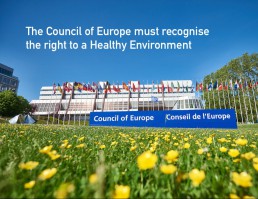
Joint call on CoE to adopt Protocol to the ECHR on the right to a clean, healthy and sustainable environment
Joint call on Council of Europe to adopt Protocol to the European Convention on Human Rights on the right to a clean, healthy, and sustainable environment
A broad group of civil society organizations, social movements, and Indigenous Peoples Organizations have called on the Ministers of Foreign Affairs and Permanent Representatives of the Member States of the Council of Europe for the swift recognition of the human right to a clean, healthy, and sustainable environment through an additional Protocol to the European Convention for the Protection of Human Rights and Fundamental Freedoms.
The joint letter sent to representatives of the Member States of the Council of Europe reflects a core priority for children, youth and many other constituencies across the continent and is supported by a broad coalition of organizations working for human rights, environmental protection, gender equality, social inclusion, as well as trade unions and faith-based organizations.
The adverse impacts of the triple planetary crisis of climate change, pollution, and biodiversity loss can be felt by all people living in the Member States of the Council of Europe. Across the continent, more than 300,000 people die prematurely every year due to atmospheric pollution. The accelerating climate crisis fuels unprecedented heatwaves, prolonged droughts, repeated floods, sea-level rise, and disastrous wildfires that ravage communities and ecosystems. From the Mediterranean Sea to the Arctic Circle, entire ecosystems are collapsing and communities suffer from the consequences from the irreversible loss of biodiversity, affecting the supply of safe drinking water, contributing to poor air quality, threatening food security, decreasing the resilience of communities, and wiping out cultural practices. As a result, younger generations now grow up with new forms of anxiety. These crises exacerbate existing inequalities and most seriously affect the human rights of those already in marginalized situations.
In forty-two of the forty-six Council of Europe Member States, the right to a clean, healthy, and sustainable environment is already protected through national constitutions, legislation, court decisions, or as these States are Parties to the Aarhus Convention. The scale of the harms for people living in Europe, and the importance of coming to a unified approach in interpreting and implementing the right to a clean, healthy, and sustainable environment makes it imperative for the Council of Europe to urgently take decisive steps toward the adoption of a binding legal framework that recognizes and protects the right to a clean, healthy, and sustainable environment.
The adoption of an additional Protocol to the European Convention on Human Rights would provide the most powerful and impactful human rights-based response to the environmental crisis, filling a gap in human rights protection, leading to clarifying policies required and fostering accountability that is vital for the protection of present and future generations. It would reinforce and consolidate the legal protection of the right to a clean, healthy, and sustainable environment throughout Europe, further ensuring the enjoyment of all human rights. It would also equip governments on the continent with additional legal norms to defend their policies against encroachments and abusive judicial actions by corporate actors.
Europe can ensure the health and well being of children today and in the future by acting now.
Read the complete letter here.
Stand up for children’s rights in the upcoming EU Elections
Stand up for children’s rights in the upcoming EU Elections
Brussels – 21 March 2024: Today, at the European Parliament, 23 Civil Society and International Organizations working on children’s rights are launching the #VoteforChildren campaign. With the objective of mobilising candidates to the next EU Elections to promote and protect children’s rights throughout the next legislature, child rights experts are calling on future Members of the European Parliament to commit to become Child Rights Champions.
The #childrights manifesto which will be launched today outlines concrete measures to address the challenges children face today in Europe and globally and features recommendations to ensure that children’s voices are heard, and their rights protected at every level of decision-making. The coalition wants to see a European Union that delivers for ALL children by mainstreaming and protecting children’s rights, breaking the cycle of poverty and inequality and engaging with children.
During the event, the Europe Kids Want survey results will also be released, offering insights into the current concerns and aspirations of children living in Europe. More than 9,200 children across Europe responded and shared their concerns about education, mental health, addressing bullying and violence. One of the most striking figures of the survey reveals that 80% of children living in Europe are concerned by the spreading of conflicts all around the world. 50% of the responders also indicated that they do not feel safe online, while 36% of LGBTQI+ children indicated that they don’t feel safe in their homes. In consultations, children also highlighted a sense of hopelessness and lack of trust in politicians’ will to tackle climate change. And most of them (56%) believe that their opinions had a very limited impact on decisions taken.
“Politicians are not interested in children because they cannot vote. This is why they are not aware of our problems. They believe that we will grow up and our problems will disappear”.- said Harry, 14, from Bulgaria.
“We are the present, not the future, we are here.”- Valentina, 15, from Croatia.
The children’s ask is clear: they want the EU to act now to protect their present and build a brighter future.
The #VoteforChildren campaign will last until the EU Elections, when a new class of child rights champions will be tasked with their most important job: realise an European Union for and with children.
For further information: childrightsmanifesto.eu
Contacts:
Margherita Leone, Save the Children – margherita.leone@savethechildren.org
Louise Reeg, SOS Children’s Villages International – louise.reeg@sos-kd.org
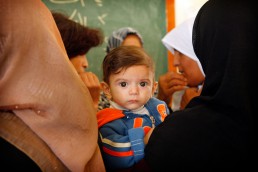
The United Nations and governments must put children at the heart of their work
The United Nations and governments must put children at the heart of their work
Terre des Hommes and partners urge the United Nations and member governments to take decisive action to integrate children’s rights into all aspects of their work.
During the United Nations (UN) Human Rights Council, which met today in Geneva for the Annual Meeting on the Rights of the Child, an important discussion was held about ensuring children’s rights are properly considered and addressed across the whole UN system.
More coordinated action is urgently needed to support children who are affected by a multiplicity of crises throughout the world. Recognising this, the United Nations Secretary-General recently issued guidance mandating the entire UN system to make all its work child sensitive.
We welcome this Child Rights Mainstreaming guidance and call for a child-rights approach at all levels and across all pillars of the UN, and within governments’ national systems and policies. Crucially, children should be partners in the work, and be supported to participate in a meaningful, safe and inclusive way.
More concretely, Terre des Hommes and partners are calling on the United Nations and Member States to:
- Take measures to ensure the Human Rights Council consistently monitors progress on how child rights are being mainstreamed in practice;
- Provide more resources to OHCHR – the Human Rights agency of the United Nations – to implement child rights mainstreaming; and
- Put in place and fund sustainable ways to support the ethical, meaningful, and safe participation of children in all their diversity in decision-making processes at country level, as well as in regional and international spaces.
Read the full statement here.
Picture courtesy of: ©Tdh/Florian Cella
JOINT STATEMENT: The EU Forced Labour Ban requires clear and effective remediation measures
JOINT STATEMENT: The EU Forced Labour Ban requires clear and effective remediation measures
We, the undersigned organisations, welcome the objectives of the European Commission’s proposal for a Regulation (2022/0269 COD) on prohibiting products made with forced labour on the Union market, the so-called ‘EU Forced Labour Regulation’.
As Companies, Trade Unions, Civil Society Organisations, Certification Organisations and Multi-stakeholder Initiatives, we stress the need to have clear and effective provisions on remediation in the EU Forced Labour Regulation.
Remediation is a key step of human rights due diligence, as defined by the UN Guiding Principles on Business and Human Rights (UNGPs) and the OECD Due Diligence Guidance for Responsible Business Conduct (RBC). Provisions for remediation are also expected to be included in the EU Directive on Corporate Sustainability Due Diligence (CS3D).
Including remediation and other appropriate measures in the EU Forced Labour Regulation would enhance the legislation’s effectiveness in eradicating forced labour from supply chains.
Remediation provisions regarding forced labour are crucial for providing remedy to victims of forced labour.
At the same time, they can support companies in building meaningful long-term relations with their suppliers to address and prevent forced labour risks in their operations and supply chains.
Consequently, the EU Forced Labour Regulation should indicate the possibility for companies to take remedial actions depending on their involvement in an identified case of forced labour. These remedial actions should be aligned with the cause, contribution and linkage “involvement framework” set out in the UNGPs and OECD Due Diligence Guidance for RBC and expected to be included in the EU CS3D.
Competent authorities or the European Commission should be required to lift the withdrawal of the concerned products from the market if they establish that companies took action to remediate forced labour cases in line with the above-mentioned involvement framework.
Brussels, 26 February 2024
Find the list of signatories here.
Picture by ©Florian Cella
Protect Palestinian children: The Terre des Hommes network calls on world leaders
Protect Palestinian children: Terre des hommes calls on world leaders
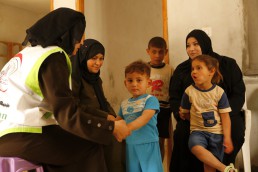
From Gaza to the West Bank, Palestinian children are under attack. Even children who will survive to see the next ceasefire are traumatised and will live with debilitating memories for the rest of their lives.Terre des Hommes International Federation along with Terre des hommes Lausanne, is calling on world leaders to take immediate action after 100 days of war on Gaza.
“My life is hard, hard, hard, very hard. What do you expect?”, says a girl in Gaza.
We have said it before, and we say it again: No Palestinian child is safe. Whether they have lost a family member or friend, seen their home destroyed, been forced to leave their neighbourhoods, and seek refuge in temporary shelters, children in Gaza live in constant fear for their lives and their loved ones. Their whole existence is permeated by the earth shattering destruction and incomprehensible violence of war.
As an international child rights organisation working in Gaza and the West Bank, we cannot accept the inaction of leaders in the face of the grave situation of children in the Occupied Palestinian Territory (OPT). This is why we are addressing a declaration to world leaders in order to accelerate efforts towards an immediate and lasting ceasefire. We demand an end to this war against children in Gaza, a situation that our team on the ground is witnessing day after day.
With 40% of Gaza’s population being under the age of fifteen, children are bearing an enormous share of the burden of war. Children in the OPT live under constant threat of violence, injury, and death.
Israeli bombardments and airstrikes have killed more than 10,000 children and injured thousands more. For every ten minutes that the war in Gaza continues, another child is killed.
Meanwhile, in the West Bank and East Jerusalem, Tdh teams are also witnessing an alarming increase of human rights violations experienced by Palestinian children and their families. Israeli forces have increased the number of civilian arrests, compounding longstanding mistreatment of children in Israeli military detention.
The situation in the OPT is of increasing concern because of the serious human rights violations committed against children. Children in particular face severe physical and psychological trauma. The brutal violence experienced by Palestinian children and their communities will resonate for generations.
Tdh stands alongside Palestinian children and calls on the international community to take urgent action to stop the war on children in the OPT, to ensure that the full spectrum of their rights is respected and that violations of their rights are not met with impunity. In this time of unprecedented crisis, bold leaders will be remembered for taking decisive action taken to achieve lasting peace.
The statement was sent directly to more than 30 relevant leaders, offices and institutions, including United Nations Secretary-General António Guterres, European Commission President Ursula von der Leyen and President of the Swiss Confederation Viola Amherd.
Join us as our Finance/ Administrative Adviser and Fundraiser
Join us as our Finance/ Administrative Adviser and Fundraiser
Position: Finance/ Administrative Adviser and Fundraiser
Location: International Secretariat, Brussels, Belgium
Part-time position 80%
The Terre des Hommes International Federation (TDHIF) is a leading child-focused independent non-profit global coalition, composed of nine national member organisations. TDHIF works worldwide for the promotion and implementation of children’s rights through 890 humanitarian and development projects in 68 countries, as well as through global, regional and national advocacy and campaigns, run for and with children.
TDHIF thrives to guarantee that every child has a safe and enjoyable childhood, that every young person feels empowered and that every community we work with is engaged.
TDHIF is supported by an International Secretariat with a team of 6 people located in Brussels and Geneva, with essential advocacy, representation, coordination, and standard setting functions.
Key responsibilities
As a member of the International Secretariat team, she/he reports directly to the Secretary General. The finance/administrative adviser and fundraiser ensures the running of the finance, administration, logistics, HR and IT of the International Secretariat -with the support of external service providers. She/he is also tasked to identify and seize funding opportunities for specific Federation’s projects and to ensure the follow up with potential donors.
Main tasks:
- Lead the financial management of the International Secretariat of TDHIF, under the Secretary General supervision.
- Assist the preparation of the annual International Secretariat’s budget and ensure the budget and accounts’ monitoring.
- Manage the treasury and ensure all payments.
- Manage all organisational and administrative tasks related to the offices in Brussels and Geneva, in collaboration with our external service providers (an accountant, an HR service provider in charge of payroll, several health insurance brokers and IT and other procurement services).
- Develop and support recruitment, other HR processes and HR management tools.
- Engage in fundraising, in collaboration with the International Secretariat team, for joint project proposals for advocacy/campaigns and/or programmes and manage small grants.
- Support the administrative and logistic organisation of events, visits and travels, as needed.
Key competencies and qualifications
- Candidates must embody the key values of TDHIF and be driven by its mission. They should demonstrate the following skills and qualities:
- Comprehensive educational background and working knowledge of concepts, practices and procedures in relation to accounting, financial, administration and HR management and fundraising.
- 5 years of professional experience in finance, administration and HR management, with ideally one of them acquired in Belgium and/or Switzerland
- At least 1 year experience in fundraising, generating and successfully managing grants and other donations from a number of sources, especially at EU level
- Strong numeracy and analytical skills
- Fluency in English and French both written and verbal
- Excellent computer literacy -including of accountant software such as ..)
- Able to work independently, run processes and deliver timely end-results of good quality
- Strong solution-oriented approach
- Ability to multitask and work well under pressure, with deadlines
- Previous work experience in the international development and/or humanitarian aid sector and/or child rights field is an asset
- EU citizenship or a valid working permit for Belgium is required
We offer
An exciting opportunity for an individual with a genuine commitment to improve the lives of children across the globe.
Personal development opportunities and good working conditions in a multicultural environment.
The role is defined as a part-time position, at 80%, based in Brussels with flexible working arrangements and working time.
Application procedure
TDHIF is an equal opportunity employer.
Our recruitment procedures reflect our commitment as an organisation towards keeping children safe.
To apply, please send an up-to-date curriculum vitae (including comprehensive details of key achievements and responsibilities) along with a cover letter of application addressing the person specification at jobs@tdh.de. Please send your application by the 04 February 2024.
Shortlisted candidates will be sent a written test and invited to have an online interview with the Selection Panel, followed by an in-person interview for finalist candidates.
The successful candidate will be expected to take up the post mid-April 2024.
Picture: ©Tdh/Florian Cella