
A Call for Humanity: It’s Time for EU Leaders to Take a Stand
A Call for Humanity: It’s Time for EU Leaders to Take a Stand
An open letter from VOICE and the CEOs of 96 humanitarian NGOs to all decision-makers in the European Union and its Member States.
It only took a few days for the U.S. decision to freeze its foreign aid and dismantle USAID to sever the lifeline of millions of people worldwide and disrupt the entire humanitarian system.
Almost overnight, vaccine and nutrition treatment distribution halted, clinics and schools closed, and access to clean water and sanitation – among other critical services – was jeopardised. This is a dramatic blow to the 307,6 million people projected to need urgent humanitarian assistance and protection in 2025.
For example, with the US foreign aid suspension, 95 million people would lose access to basic healthcare1 and 23 million children would lose access to education programs, increasing poverty cycles2.
Many grassroots, local and national NGOs that are the backbone of humanitarian responses have already suspended programs, laid off staff and many face closure, severely impacting their capacity to respond to the urgent needs of affected communities.
The US decision is unprecedented in scale, form, and impact, and is part of a worrying long-term trend. The gap between humanitarian needs and available funding has more than tripled from $8.4 billion in 2016 to $26 billion in 20243, due to a massive increase in needs and, more recently, significant funding cuts from multiple donors, including European States.
In this challenging time, we urge the EU and its Member States to take unified and decisive actions to uphold the core values of its foundation – solidarity, the eradication of poverty, and the protection of human rights. This is not only a legal obligation from the Lisbon Treaty (article 214), nor merely the will of European citizens, it is also fundamental in reflecting European values within the broader global community. Guided by the principles of humanity, impartiality, neutrality and independence, humanitarian action saves lives and strengthens communities’ resilience every day. To uphold these values, we urge the EU and its Member States to remain global leaders in solidarity by taking the following actions.
- We urge the EU and its Member States to stand by crises-affected communities, by increasing the humanitarian funding that ensure their continuous access to basic services. In particular, as discussions accelerate on the next EU Multiannual Financial Framework, the current global humanitarian crisis should serve as a wake-up call for adopting a stronger humanitarian budget.
- We call on the EU and its Member States to increase their dialogue with national and international partners, and demonstrate understanding, flexibility, and extensive support – administratively, financially, and legally – with actors delivering humanitarian assistance. International, national, and especially local NGOs are facing immense challenges in fulfilling their commitments to people affected by crises. Emergency support measures and enhanced quality, localised and flexible funding, as laid out in the Grand Bargain commitments, are critical to maintaining humanitarian actors’ operational capacity.
- In the longer term, we call on the EU to take the lead as a convener of a global strategic dialogue to shape a principled, sustainable and flexible new humanitarian system that works with and for the most vulnerable communities and that relies on a diverse range of actors, including new donors, private sector and robust EU and Member States’ support.
The far-ranging impacts of the decisions of one single state show how intertwined our world is. This is a call for all EU political actors to stand up for humanity and lead a new positive political dynamic that saves lives and makes a real difference for all, at home and worldwide.
See the full list of signatories here.
1 USAID: The Benefits and Upcoming Losses in Numbers
2 USAID: The Benefits and Upcoming Losses in Numbers
3 FTS UN OCHA


Digital Voices: What Children Really Need Online
Digital Voices: What Children Really Need Online
“Only children know what we need and how we will understand something,” says a young person from Croatia participating in the Voice research project. This powerful statement captures the heart of digital safety – listening to those most affected.
The internet offers incredible opportunities for connection, learning, and self-expression. However, it also presents significant challenges for children and youth worldwide.
The Voice research project by Terre des Hommes Netherlands, ECPAT International and Eurochild on behalf of the Down to Zero Alliance, which spoke with 483 children across 15 countries in EU Member States, Asia and Latin America, revealed that children and caregivers often feel alone when dealing with online dangers. They feel responsible for staying safe but frequently lack necessary tools and support.
Children from the study shared that they often want their own space and don’t always want to share everything with adults. Many children also shared that talking about things like child sexual abuse can feel awkward or uncomfortable. And similarly, adults also don’t always know how to talk about these topics without upsetting children.
A survey conducted as part of the Indifesa Observatory, by Terre des Hommes Italy in collaboration with Scomodo on a sample 2,741 young people under 26, provides deeper insights into youth experiences. 58% of young people under 26 consider revenge porn the greatest risk on the internet, followed by detachment from real life (49%), harassment (47%), and cyberbullying (46%). However, among younger individuals, cyberbullying is the most feared risk, cited by 52% of those under 20.
Children from the Voice project have clear recommendations: they want schools, online platforms, and governments to provide better online safety information. They seek educational programs they can understand, child-friendly platform features, and stronger accountability for online safety violations.
Despite understanding digital risks, many young people still struggle with online safety. 86% recognize the dangers of sharing intimate content, yet over half admit to sharing passwords.
This Safer Internet Day let’s commit to truly hearing children’s voices and addressing their digital safety needs.
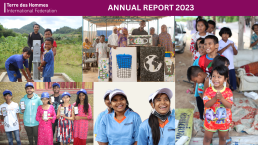
Terre des Hommes’ 2023 Annual Report: A powerful story of impact and hope
Terre des Hommes’ 2023 Annual Report: A powerful story of impact and hope
In 2023, children and young people faced substantial and growing challenges, and the enforcement of their rights has further declined worldwide.
In response, Terre des Hommes International intensified its efforts: together with 886 partner organisations, we supported almost 7 million children and young people, their families and communities in 68 countries, through innovative programmes, advocacy and campaigns – and notably by ensuring fruitful collaborative initiatives with children and youth.
We have been at the forefront of creating meaningful change: from combating the climate crisis to protecting children from online abuse, supporting children on the move and ensuring child participation in critical global processes.
Moving forward, Terre des Hommes International Federation commits to pursue and reinforce its action to defend and further advance children and young people’s rights and to create a world where every child can thrive and live in safety and with hope.
We extend our deepest gratitude to our partners, supporters, and the resilient children and young people we serve, whose courage, strength and engagement inspire us every day. Together, we will continue to champion their rights and well-being.
Read more about our projects and impact in Terre des Hommes International Federation’s Annual Report for 2023.
EU Takes Historic Stand Against Forced Child Labour
EU Takes Historic Stand Against Forced Child Labour
The EU Forced Labour Regulation has been published today in the EU Official Journal and will enter into force tomorrow. This landmark legislation represents a comprehensive approach to eliminating forced labour and forced child labour throughout global supply chains, introducing strict measures that prohibit the placement and sale in the EU or the export from the EU market of products made using forced labour or forced child labour, regardless of their geographic origin.
The regulation extends its reach across all industries, ensuring that any product—from textiles and electronics to agricultural goods and mining products—must be free from forced labour or forced child labour at every stage of production, manufacture, harvest or extraction, as a whole or in part. The scale of the problem underscores the critical nature of this intervention. According to the International Labour Organization (ILO), approximately 27.6 million people worldwide are trapped in forced labour, including 3.3 million children, making this EU regulation a crucial step towards addressing this severe violation of human rights that affects children worldwide.
The legislation establishes a robust framework for investigating forced labour cases in supply chains. National authorities in EU member states will conduct comprehensive investigations, with decisions to ban or withdraw products recognised across all EU member states. This approach provides a balanced mechanism that not only protects workers’ rights but also offers companies an opportunity to demonstrate their commitment to ethical practices.
When national authorities determine that forced labour, including forced child labour, has been used in a product’s production, they can ban and withdraw the product from EU market and online platforms. However, the regulation also provides a pathway for companies to present evidence of preventive and remedial measures, potentially allowing them to lift the ban and return their products to the EU market.
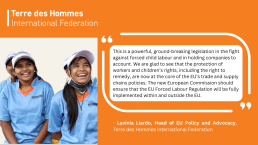
Lavinia Liardo, Head of EU Policy and Advocacy at Terre des Hommes International Federation, praised the legislation as “ground-breaking and powerful.” She emphasized, “We are glad to see that the protection of workers and children’s rights, including the right to remedy, are now at the core of the EU’s trade and supply chains policies. The new European Commission should ensure that the EU Forced Labour Regulation will be fully implemented within and outside the EU.”
The significance of this regulation extends far beyond market protection. It complements the Corporate Sustainability Due Diligence Directive, which entered into force in July 2024, and represents a transformative approach to international trade, holding companies accountable for their supply chain practices while providing a mechanism to protect vulnerable workers. Moreover, the regulation boosts consumer confidence by guaranteeing human rights standards in products, creating a new paradigm of ethical consumption.
The European Union has taken a significant stride in transforming global labour practices, setting a powerful precedent for protecting human rights in international trade. By implementing this comprehensive approach, the EU demonstrates its commitment to addressing forced labour worldwide, potentially influencing global standards for labour rights and ethical production.
Open Letter to EU decision makers: Stop the Child Sexual Abuse Crisis now
Open Letter to EU decision makers: Stop the Child Sexual Abuse Crisis now
On this World Day for the Prevention and Healing from Child Sexual Exploitation, Abuse and Violence, we, a coalition of 73 organisations working on children right’s, urgently call on you to pass critical laws to protect children against sexual abuse and exploitation, online and offline.
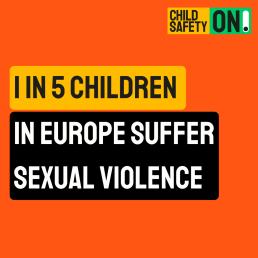
Europe is facing a Child Sexual Abuse Crisis. Available data indicate that about 1 in 5 children in Europe have experienced some form of sexual violence. Children across all social, economic, cultural, and geographical backgrounds are affected, facing abuse in various environments – from family homes and schools, social media and gaming platforms to institutional settings.
Online, the scale, severity, and violence of child sexual abuse are spiraling out of control, with over half of young people having experienced some form of sexual harm online in their childhood. More than 100 million images or videos of children being sexually abused were found online last year, and this may be just the tip of the iceberg. 98% of these images show children under 13 years – children who have to live
with the ongoing trauma of their abuse circulating online perpetually.
“For a very long time, I was very stressed, and I slept very badly […] what would happen if those images came out, and what would everyone think of me? […] in my head it had just sort of taken on this enormous catastrophic proportion that my life was going to end” – Nora, Survivor.
In an unregulated online world, children are easily contacted by offenders, manipulated to share intimate images and sent inappropriate content. The online solicitation of children for sexual activities (known as ‘grooming’) increased by more than 300% between 2021 and 2023.
Children as young as 3-6 are being groomed and coerced into engaging in sexual behaviour, including penetrative and sadism activities, via webcams. In absence of adequate safeguards, encrypted platforms are used by offenders to exploit children with impunity. In addition, advancements in artificial intelligence and virtual reality are being used to create child sexual abuse material with the click of a
button.
It doesn’t have to be this way. Together we can take action to end the Child Sexual Abuse Crisis and protect children from further harm.
EU Member States and Members of the European Parliament have a critical opportunity to adopt a strong EU legislative framework, with the Regulation to prevent and fight child sexual abuse and the Recast Directive on Child Sexual Abuse. Those legislations must be tailored to the realities children face offline and online, and ensure comprehensive protection and prevention measures that ultimately safeguard children’s rights. For this, the Regulation must enable the prevention, detection, removal and reporting of all forms of child sexual abuse content (including grooming) in all online spaces where children are present, including encrypted spaces. The Directive must criminalise child sexual abuse online as much as offline, extend the limitation periods for reporting and require States to provide an evidence-based, trauma-informed and child-centric response to child sexual abuse.
The UN Convention on the Rights of the Child, to which EU countries are signatories, and General Comment n°25 of the Child Rights Committee is clear that the best interests of the child should always be front and centre in decisions relative to children. We urge EU policymakers to act in full respect of international standards when deciding on these pieces of legislation.
Together these tools can effectively tackle the current Child Sexual Abuse Crisis and create a safer internet, and childhood, for children in Europe.
Find the list of signatories here.
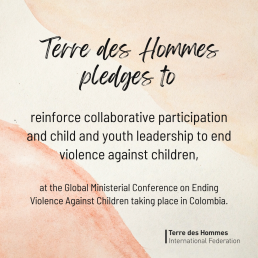
TDH Pledges Stronger Child and Youth Leadership to Tackle Violence at Bogotá Conference
TDH Pledges Stronger Child and Youth Leadership to Tackle Violence at Bogotá Conference
Every year 1 billion children experience violence globally. That’s 1 in 2 children on the planet.
The first-ever Global Ministerial Conference on Ending Violence Against Children taking place on 7-8 November in Bogota, Colombia presents a unique opportunity to deliver a transformative shift on child protection.
Terre des Hommes is participating in the Conference and amplifying children’s voices there. We are calling on States and other stakeholders to:
· step up efforts to end all forms of violence against children both offline and online
· make bold commitments to ensure children’s participation in decision-making processes.
To demonstrate our own commitment, Terre des Hommes put forward a pledge to reinforce collaborative participation and child and youth leadership to end violence against children.
In this pledge, TDHIF commits to facilitate safe, meaningful and collaborative child-led and youth-led advocacy at local, national, regional and global levels, and to support children to claim their rights, with a particular focus on the most marginalised children and those at greater risk of experiencing physical, emotional, or mental harm – including working children and children affected by the environmental degradation. This work will be done with civil society partners and children and young people themselves.
TDHIF will build on the experience of the Dialogue Works Project (2020-2024) and engage, in the next four years, in a selected number of countries in different geographical regions and at global level, to increase space for meaningful child and youth participation in policy making and ensure greater intergenerational and collaborative advocacy to sustainably improve policies and practice for the realisation of children’s rights.
Expected impact:
· Children and young people – including the most marginalized – have more skills, knowledge, ability and resources to claim their rights in a meaningful and safe manner
· Increased inclusive learning, exchange and collaboration within and between children’s groups within/across countries
· Increased space for inclusive and meaningful child and youth participation in policy making processes at local, national and global level
· Adoption of policies informed by inclusive and meaningful child and youth participation that protect, promote and fulfil their rights efficiently and in a sustainable manner
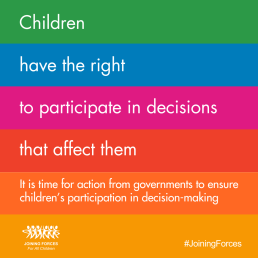
Joint Statement: End Violence Against Children and Invest in Children's participation in decision making
Joint Statement: End Violence Against Children and Invest in Children's participation in decision making
Ahead of the first-ever Global Ministerial Conference on Ending Violence Against Children taking place in Bogota on 7-8 November, Joining Forces alliance, of which Terre des Hommes is a member, is demanding concrete commitments to end violence against children and is making an urgent call to action for deeper financial investments and political will to ensure children’s systematic participation in decision-making processes.
IT IS TIME TO END VIOLENCE AGAINST CHILDREN AND INVEST IN CHILDREN’S PARTICIPATION IN DECISION MAKING
If governments at the Bogota Global Ministerial Conference in November want to end violence against children, they must make bold commitments to support children’s participation in the decisions that affect their lives.
Every year one billion children are victims of cruel acts of violence. That’s one in two children on the planet. Children have a right to live in a world free from violence. We must step up efforts to end violence in childhood and to strengthen and invest in children’s participation if we are to achieve the vision of the 2030 Agenda for Sustainable Development (the Global Goals). A vision of world of peace, justice, and inclusion, where girls and boys are able to live free from violence.
On 7-8 November, the first-ever Global Ministerial Conference on Ending Violence Against Children will take place in Colombia. And it has the potential to change the course of those one billion childhoods.
Important decisions will be taken at the Global Ministerial Conference which impact children and their rights now, and long into the future. Joining Forces is supporting the campaign to get ministers from around the world show up and make big, bold and brave commitments to keep every child safe. The power to end violence against children is in their hands.
Children’s participation supports their right to protection
Governments worldwide have committed to ending violence against children by ratifying the UN Convention on the Rights of the Child (UNCRC), reinforced by the 2030 Agenda for Sustainable Development (the Global Goals). However, progress has been uneven and insufficient. Worsening global conflicts, negative consequences of migration, and the misuse of technology are rapidly exacerbating the challenges children around the world face when it comes to hunger, poverty, ill-health, gender bias, and exploitation. Violence against children is on the rise and traditional responses are not having the impact needed.
Failing to prevent and respond effectively to violence against children has lifelong consequences, perpetuating a cycle of violence and hindering social and economic development. With only six years remaining to achieve the ambitions of the 2030 Agenda for Sustainable Development, there is an urgent need to strengthen and invest in children’s participation.
Children consistently tell us – and show us – that they want to participate and take action on issues that concern them. Across the globe, children are contributing to the resilience of their communities, advancing their own protection, driving social progress, inspiring political change and proposing innovative solutions.
Children’s participation is a right, but also a catalyst for the realisation of other rights such as their survival, protection and right to thrive. Strengthening children’s voices can help claim these rights.
Our call to action on children’s participation in decision-making
Joining Forces, an alliance of six international NGOs working with and for children, is making an urgent call to action for deeper financial investments and political will to ensure children’s systematic participation in decision-making processes. We demand greater financial investments, political will and accountability by governments and the wider international community for children’s systematic participation in decision-making processes. Children must have a seat at the table.
Specifically, Joining Forces is calling on governments to:
• Strengthen legal and policy frameworks guaranteeing children’s right to be heard as well as their civil and political rights, as enshrined in the UNCRC
• Establish and institutionalise structures and mechanisms for equitable and inclusive child participation
• Invest in child participation mechanisms, across sectors and at all levels of government
• Strengthen children’s capacity, confidence and knowledge to participate in decision making
• Support the capacity and willingness of adults to facilitate and enable children’s meaningful and ethical participation
It’s time to amplify children’s voices and empower them to participate in decisions affecting their future, especially when their safety and lives are at stake.
Learn more about the importance of child participation in our policy brief ‘A Seat at the Table’ or find out how to call on your government to step up on ending violence against children worldwide.
About Joining Forces: Joining Forces is an alliance of 6 international NGOs working with and for children to secure their rights and end violence against them.
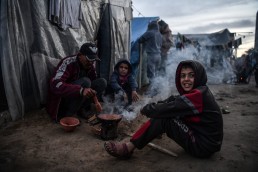
One year on: States must act now to end the indiscriminate killing of children in the Occupied Palestinian Territory and the region
One year on: States must act now to end the indiscriminate killing of children in the Occupied Palestinian Territory and the region
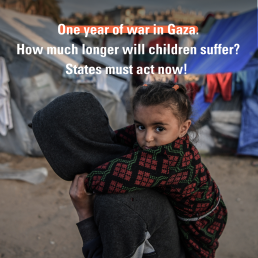
Over the past year, the world has witnessed a blatant disregard for international law, including the international humanitarian law (IHL), resulting in unprecedented levels of violence against children in both the Occupied Palestinian Territory and Israel and in the Region. This violence occurs in the context of Israel’s decades-long unlawful occupation and annexation of Palestinian territory.
The crimes committed by Hamas and other Palestinian armed groups on 7th October 2023, which resulted in the death of nearly 1,200 people, many of them of young age, including at least 33 children, and the taking of 251 hostages, have been widely condemned. In retaliation, Israel’s military operations in Gaza have officially killed more than 40,000 people, including over 14,000 children, while almost 100,000 people have suffered life-altering injuries and potentially irreversible mental harm. Additionally, an estimated 20,000 Gazan children remain missing.
Meanwhile, in the West Bank, the use of unnecessary and disproportionate force by the Israeli Defense Forces, along with increasing settler violence, house demolitions, forced displacement, has resulted in the death of nearly 700 Palestinians, including at least 143 children, and the displacement of thousands more.
Israel’s conduct of hostilities and practices of humanitarian access have made it nearly impossible for humanitarian, human rights, and development aid organizations to fulfill their mandates. The shrinking humanitarian space in Gaza is not conducive to providing robust and meaningful humanitarian aid to people in need.
For decades, members of Terre des Hommes International Federation have provided life-saving humanitarian support in the West Bank and Gaza.
Over the past year, we have witnessed firsthand the immense pain and suffering experienced by children, their families, and the entire communities in the region, yet their resilience in the face of overwhelming challenges continues to inspire our work.
The long-term impact of this extreme violence on children, youth, and future generations is impossible to predict with certainty.
We are deeply concerned about the future, as this situation calls into question how these communities will be able to rebuild and coexist in a peaceful and sustainable way.
Members of Terre des Hommes International Federation reiterate their call for::
▪ Immediate ceasefire in the Occupied Palestinian Territory and in Lebanon and dedicated diplomatic efforts for de-escalation in the region.
▪ The immediate and unconditional release of all hostages and individuals arbitrarily detained.
▪ Unimpeded access for humanitarian actors must be regular and safe.
▪ All civilians should be protected by the international law and the Rights for children should be always respected.
All States must take all measure to respect and to ensure respect for the international law, including the IHL, in all circumstances.
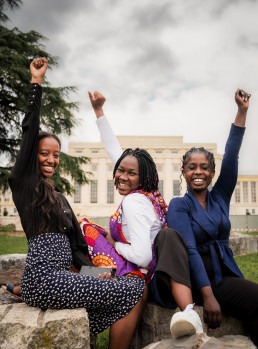
Joint statement on the Transformative Actions by girls and young women
Joint statement on the Transformative Actions by girls and young women
The UN Summit of the Future provides a critical window of opportunity to increase commitment to and investment in adolescent girls’ rights in the 2030 Agenda and post-2030 development framework, recognising that adolescent girls are currently at risk of being left behind.
Terre des Hommes International along with numerous other partners, echo this call by girls and young women:
“We want our voices to be heard, and we want to engage with you in building a gender equal future that fulfils girls’ rights. We refuse to settle for anything less than full equality and justice for girls everywhere. Together, let us create a world where every girl can thrive, where their rights are upheld, and where their potential knows no bounds. Let every word of the Pact for the Future, Declaration on Future Generations and Global Digital Compact be a firm commitment to the future laid out here.” (The Girls’ Pact for the Future, May 2024)
We recognise that the Summit of the Future is a critical, once-in-a-generation opportunity to reinvigorate global action, recommit to fundamental principles, and further develop the frameworks of multilateralism so they are fit for the future. As such, it provides a critical window of opportunity to increase commitment to and investment in adolescent girls’ rights in the 2030 Agenda and post-2030 development framework, recognising that adolescent girls are currently at risk of being left behind.
Girls are still being denied their rights
More than halfway into the 2030 Agenda, adolescent girls are still being denied their rights, facing discrimination, and having their potential as change-makers underestimated. Adolescent girls and young women continue to be invisible in global policymaking and development spaces, while contemporary global challenges disproportionately affect them – especially those in developing countries and those living in crisis. Currently an estimated 29.9 million adolescent girls live in countries with the highest rates of child marriage. This figure is projected to increase to 39.9 million by 2050, with these countries having some of the youngest and fastest-growing populations in the world. An estimated 640 million girls and women alive today were married as children.
Adolescent girls account for nearly three quarters of all new HIV infections. Despite gains made in education, across the globe adolescent girls are twice as likely as adolescent boys to not be in education, employment or training (NEET). Among adolescent girls who have been in a relationship, 24% (close to 19 million) will have experienced physical and/or sexual intimate partner violence by the time they turn 20 years old.
The world urgently needs to better invest in girls’ and adolescents’ wellbeing, as well as robust evidence-informed policy, programming and action. The projected cost of inaction over the 2024-2035 period across critical areas (health, education/training, child marriage and road traffic injuries) and preparing adolescents – both girls and boys – to cope with emerging realities is staggering, totaling an alarming US$20.5 trillion.
Girls’ voices must be at the heart of these discussions through the institutionalisation of meaningful and safe participation of girls and young people in the decision-making processes of the Summit of the Future, including resourcing their sustained and meaningful participation in accountability mechanisms.
The Girls’ Pact for the Future and Transformative Actions
The transformative potential of adolescent girls and young people is often overlooked in policy-making and international commitments. Recognizing this, in May 2024, Plan International, in partnership with UNICEF, launched the Girls’ Pact for the Future, which laid out adolescent girls’ and young people’s vision for a gender-equal future and proposed a number of recommendations to achieve it. Those same young people have identified the eight (8) actions from Revision 32 of the Pact for the Future that they believe will be most impactful in addressing the barriers they currently experience and in ensuring an equal, healthy, and inclusive future that makes their vision a reality. These are the following:
- Action 6. We will invest in people to end poverty and strengthen trust and social cohesion.
- Action 8. We will achieve gender equality and the empowerment of all women and girls as crucial contribution to progress across all the Sustainable Development Goals and targets.
- Action 9. We will strengthen our actions to address climate change.
- Action 14. We will protect all civilians in armed conflict.
- Action 34. We will ensure that science, technology and innovation improve gender equality and the lives of all women and girls.
- Action 37. We will invest in the social and economic development of children and young people so they can reach their full potential.
- Action 38. We will promote, protect and respect the human rights of all young people and foster social inclusion and integration.
- Action 39. We will strengthen meaningful youth participation at the national level.
With this statement, we call on Member States to:
- Protect, strengthen, commit to, and champion the above Transformative Actions in the negotiations for the Pact for the Future, and in all ways possible in the Summit of the Future in September;
- Make commitments and investments for adolescent girls and young people in the Summit of the Future; and
- Commit to implement these Transformative Actions beyond the Summit of the Future.
Organisations Signing on to the Statement
- Adolescent Girls Investment Plan (15 member organizations)
- AMPLIFY Girls
- Breakthrough Trust
- Gender and Adolescence Global Evidence (GAGE)/ODI
- Girl Effect
- Girls Not Brides: The Global Partnership to End Child Marriage
- Nala Feminist Collective
- Obama Foundation
- Plan International
- Partnership for Maternal, Newborn, and Child Health (PMNCH)
- Population Council GIRL Center
- She’s the First
- Terre des Hommes International Federation
- The Working Group on Girls (24 member organizations)
- Women Deliver
- UNICEF
Photo credit: @Plan International/Enzo Mauro Tabet Cruz
416 civil society organisations call on the EU Institutions to safeguard democracy and foster civic space
416 civil society organisations call on the EU Institutions to safeguard democracy and foster civic space
On the occasion of the International Day of Democracy, Terre des Hommes International, along with a diverse coalition of society organisations, platforms and networks across the EU, issued an urgent open letter to the leaders of the EU institutions. The letter calls for decisive action to foster a vibrant civic space, uphold democracy, and safeguard fundamental rights over the next five years.
Addressed to the upcoming Polish, Danish, and Cypriot Presidencies of the Council of the European Union, and the Presidents of the European Parliament and European Commission, the letter has garnered support from 415 civil society organisations —belonging to 26 Member States and EU candidate countries. Amid growing concerns over the erosion of democracy in the EU, the document outlines concrete actions to promote democracy, enable, support and protect civil society, strengthen civil dialogue and protect human rights.
The signatories call to take up the following priorities to guide the action of the EU in the next five years:
- A European Civil Society Strategy, integral to a broader European Democracy Agenda, to provide a robust and coherent policy framework that enables, supports and protects civil society.
- A strong mandate for a Commission Vice President responsible for democracy, civic space and dialogue with civil society.
- Reinforcing intermediary bodies and adopting a Civil Dialogue Agreement.
- Funding Policies empowering civil society.
- A European Democracy Semester building on the European rule of law cycle.
- A stronger role of the Fundamental Rights Agency as the European human rights institution.
Read the full letter here.
Support our #EUCivicSpaceNow cause: share the letter today!